Friday, 31 July 2009

This week's atheist camp has at its heart a harmful brand of atheism

Today, somewhere near Bath, tents are being taken down, trains are being boarded and 24 newly enlightened children are on their way home. They are, of course, returning from Camp Quest, the first ever atheist camp in the UK.

The arrival of the camp is another milestone in the rise of a new brand of atheism spearheaded by evolutionary biologist Richard Dawkins. From London buses to Somerset camps, Dawkins’ crusade has marched ever onwards in its mission to expose religious thought as irrational and foolish, and to promote the clear-thinking rationality behind atheistic thought. It is a movement, he will argue, to free atheists of the discrimination and persecution they so frequently face, and to protect those who are the victims of theistic indoctrination.

As an atheist, I naturally see eye to eye with many of Dawkins’ thoughts; I agree that following a strictly rational and logical thought process leads to the lack of belief in a god, and further that this does not inhibit a person from appreciating the astounding complexity of the world we live in. His post-Darwin model of morality is something I find plausible, with the absence of any objective ethical code that religion appeals to, and much his effort to address the aggression shown towards atheist thought is commendable. However, like so many of Dawkins’ critics, I despise and feel let down by the brand of atheism that finds itself at the very heart of Camp Quest.

The problem lies in the premise of Dawkins’ arguments: atheism is rational, logical and reasonable, and so the acceptance of all of science, and nothing more, will not lead to the belief in god. Belief, he argues, requires an extra leap; an unwarranted and unjustified leap, the sort of leap that would lead to belief in fairies, spaghetti monsters and Zeus were you to find the right book. True as this may or not be, it seems to me that attacking theists for irrationality largely misses the point; it is the leap of faith taken by theists that makes their beliefs so important to them. Dawkins’ error is that he fails to recognize that for many there is more to life than thinking rationally, something to be gained from going beyond only that which can be absolutely proven, a happiness to be acquired despite the fact that it comes from incoherent reasoning.

The question is why this should trouble Dawkins so much. Why should he feel threatened because others have not embraced rational thought in the way he has? Here Richard Dawkins has frequently argued that religion offers nothing to the world but evil and conflict, and that atheists the world over are persecuted for essentially being sensible. Neither of these holds up well to gentle questioning.

We have all seen the devastating effects of religion; the planes that destroyed the twin towers in 2001, the bombs that killed 56 people in London in 2005, and the wars across the world declared in the name of higher powers. However we have also seen the devastating effects of capitalism, in the millions who die each year of malnutrition. We have seen politics lead our country to two wars in the Middle East in the last 8 years, and the killing of 6 million Jews by an atheist dictator. Religion is only one source of conflict, and on many occasions religion only serves as a convenient mask for ongoing political struggles; indeed, many extremist regimes, such as that in Saudi Arabia, is a product of that particular society rather than of Islam. I do not deny that religion has claimed its victims, and continually oppresses people to this day; but it is not the only force that does this, and to attack religion from this view fails to account for the importance of spirituality to billions of people.

His claim that he is motivated by the discrimination of atheists is troubling too. Dawkins in particular refers to the US, where atheism is one of the greatest obstacles to political power. However, whichever country he chooses, the persecution of theists is far more significant than that of atheists, both throughout history and today. If this has been overlooked, it is no doubt due to Dawkins’ prioritizing of the Christian faith. Indeed, if there is a greater obstacle to political power in the US than atheism, it is being a muslim, as Barack Obama so nearly found out. To say that the vitriol directed towards Islam is equaled by that against atheists is foolish, and insulting. No persecution is acceptable in any form, but Dawkins’ attempts to paint atheists as the victims is quite negligible in comparison. Aside from this, if it is discrimination he cares about, you certainly couldn’t guess it, as his campaign has gathered ever more aggression. It was only recently, in fact, that Dawkins’ encouraged the ridicule and mocking of theists (Carlo Strenger wrote an interesting article about Dawkins’ complete negligence of the psychology of bullying). If Dawkins has atheists’ best interests at heart, he is certainly not helping them escape discrimination with his belligerence.

If the foundations of this aggressive brand of atheism are weak, it hasn’t yet reached Dawkins. Following the release of ‘The God Delusion’, his campaign has gathered ever more pace, and noticeably more urgency. His media presence has increased, and his message given an airing wherever possible; his recent documentary on Charles Darwin could barely resist a 10 minute aside in which he gently mocked religious belief. In short, the new brand of atheism is becoming as aggressive and inconsiderate as the views it attempts to quash; more than this, it is becoming petty and needless.

Which brings us back to the atheist camp. If one already had suspicions that it was preaching to the converted, its websites’ appeal to “children of atheists, agnostics, humanists and freethinkers” confirms this. The raison d’etre of Camp Quest is inseparable from Dawkins’ aggressive form of atheism; if atheism is defined as the absence of belief in a deity, it should be no more that this. To actively send children to a camp of this nature will only serve to encourage and promote an intolerance and distain for other world views, where we should be encouraging the acceptance and integration of all beliefs.

Still, there is a plus side. If many atheists came from strict religious upbringings, perhaps we can hope that the 3.30 train from Somerset to London is currently occupied by the next generation of Britains’ priests and bishops. It would certainly bring a smug smile to this atheist’s face.

Thursday, 30 July 2009

When does admitting you’re wrong become an “embarrassing u-turn”?

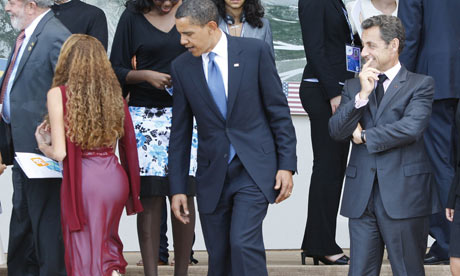
It can’t be easy being a world leader in the Barack Obama era. Ever since the president-extraordinary was sworn in on January 20th, Brown, Berlusconi and co have seemed that bit more inadequate. While Obama signs away the future of Guantanamo Bay, offers peace to the middle East and attempts to introduce state-run healthcare to the US, the rest of them find themselves falling ever into his shadows, tangled in sordid sex stories, islam bating comments and souring election defeats. Politics aside too, let’s face it: we all wanted a leader who looked that good in sunglasses. We cringed as our lousy lot fell about themselves for a buddy-shot with the new Pres, and gave a collective sigh of relief when it turned out that Obama wasn’t perving at that woman’s behind in that photo.

As it turned out this week, Obama isn’t even that bad at getting things wrong. In allegedly his worst week in office, which started with a badly managed universal health care move, things went from bad to worse as Obama stepped into the old political death-trap of the race-row. To summarise a much told story: black professor Henry Gates is arrested for disorderly conduct after policeman Jim Crowley arrives at his home following reports that Gates and another black man have tried to break into his house, Obama calls the behaviour of the cop “stupid”, and a national race row erupts. (It should be noted that Obama made no comment about race, admitting that he didn’t know the details; rather, he stated that arresting a man in his own home was stupid, and that one could understand Gates’ anger. To deny this latter fact is to ignorantly deny that there is a history of discrimination against black people in America. Obama’s comments may have been too hasty, but the race row that has erupted is a distortion of the events that have occurred, and fails to acknowledge that the election of a black president has not dissolved all racial issues in the US.)

Of course, Obama has not escaped without criticism (most noticeably from right wing Fox maniac Glenn Beck, which can only really be a good thing). But if there was one thing saving Obama from suffering even more in the polls, it is no doubt his admission that he made an error of judgment, and the beer he will share with Gates and Crowley to diffuse the matter. As debates about racial identity are replaced by online polls guessing at the beers that will be consumed, Obama lives to fight another day.

If there is any world leader left looking inferior here, it is Gordon Brown. For our own government doesn’t fare too well when it comes to back-tracking. Whether it comes to spending cuts, the publication of expenses, the Iraq war inquiry or semi-privatising Royal Mail, one phrase has persistently dogged Brown’s attempts to back-peddle out of controversial policies, a phrase that shares headline space with him almost monthly: this is, of course, the “embarrassing u-turn”.

So just when does admitting an error of judgment become a u-turn? When does the salvaged dignity that comes with Obama’s move give way to a charge of ineptitude and flip-flopping? Well the simple answer is time. As soon as the issue began to gather pace, Obama was quick to admit that his words could have been more thought-out, and even quicker to directly telephone those involved and organise the White House knees-up. Compare this to Brown, who seemingly waits until his policy is hailed with criticism, and then waits some more, and then finally changes direction. But to explain it all by time is too general, and isn’t necessarily true; were Brown to drop an idea as soon as any opposition came his way, it would be an even greater sign of weakness. No, time only masks the real issue, which is this; the longer Brown appears to delay the abandonment of a policy, the more he looks like he is acting in his own interest, dismissing all criticism until his idea literally can’t run any further, and then dropping it. Brown is left looking incompetent, unable to read public opinion; unable to care.

All this harks back to Brown’s unfortunate inability to present himself clearly and confidently to the public. The shame of this is twofold; firstly, it isn’t necessarily the case that Brown is all the things he appears to be. I do believe that he cares about public opinion, and feel that his reluctance to make any knee-jerk media-friendly decisions is a strength, not a weakness. While I agree with most critics that he has not shown the strength of leadership that many had hoped, the claims that he is inept are untrue. But the greater tragedy is that Brown is likely to lose the next election to a man with great confidence, but a complete lack of ideas. While Obama’s presentation skills are supported by ambition and policy, Cameron is all style over substance.

What Brown’s “embarrassing u-turns’ show us, then, is that a leader needs to be able to present themselves with self-assurance; however possessing this quality alone does not a good leader make.


This Week: Having seen Ben Stiller kiss a waxwork woman in Night of the Museum 2, and this week Mark Wahlberg lock lips with a monkey, Tom has decided that the romantic unity between humans and other species should not enter the film world.

Sunday, 26 July 2009

Frankie and Benny’s

Yesterday I had the rather bizarre experience of eating in Frankie and Benny's, the faux Italian-American restaurant chain. On its website it claims:

Frankie & Benny's brings together the best of classic American and Italian in both
style and cuisine. We specialise in home-style cooking "just like Mamma used to make it!"

I've been to Italy; I've not been to America but I've seen lots of films, and F&B's isn't even Hollywood-authentic. It's fun in a kitsch sort of way, until you have to eat the food which is actually fairly horrible, much worse than other similar low-budget restaurants – I pause before describing it as low-budget and a restaurant because it is hardly either. It was even worse than Pizza Hut and priced similarly to Pizza Express.

But anyway, I'm no food critic. What was especially weird was their attempts at authenticity, the decor having the feel of a diner and posters on the walls of what I assume are famous Italian-Americans. Whilst music played in the restaurant, inside the toilets was Italian language tracks, instructing how to say simple phrases in Italian.

A couple of good websites I've been wasting a lot of time on recently:

http://uncyclopedia.wikia.com/wiki/Richard_Littlejohn (my favourite entry)

http://ifyoulikeitsomuchwhydontyougolivethere.com/

On a different note here's a clip from Panorama a while ago which helps to explain how the BNP appeared to creep into the mainstream at the European elections.

Monday, 20 July 2009

Our obsession with Islam obscures the real issues of female oppression

Around two weeks ago, the French Head of State Nicolas Sarkozy claimed that the Islamic dress worn by women to cover themselves was not welcome on French soil, and a spokesperson suggested that there may be a proposal for legislation banning such dress. It is fair to make the observation that, in some cases, the hijab, jilbāb and niqāb are signs of female oppression in that such dress is enforced by a patriarchal society and women do not have the option not to wear them. However in many cases it must be noted that women do have the option not to wear them, and that in fact it is their choice to wear such dress out of modesty and respect for their religion. Even if the religion is seen as inherently sexist which some argue, their choice to wear the veil is crucial. It is not for President Sarkozy to inherit the patriarchal role by preventing women from having an option, which is what he and many others criticise the Islamic culture of doing.

The debate over Islamic dress and whether it oppresses women or not misses the point. It should not be left to the male-dominated political apex to decide the limits of a woman's freedom of expression. It takes up an incredible amount of media airtime and newspaper coverage, and such a debate is clearly politically motivated, compounded by the general Islamaphobic culture. It obscures crucial cases of gender inequality and oppression of women such as the example of female circumcision or FGM (female genital mutiliation).

The issues surrounding FGM are very uncomfortable to consider. The practice itself can be carried out under humane medical conditions and cause minimal discomfort, but for the vast majority of women this is certainly not the case. Every year large numbers of women come to the UK to escape what can only be described as torture, or to save their daughters from something they themselves were subjected to. I know a case of a woman who was taken by force by her own parents and subjected to the procedure; she then took her daughter to the UK, leaving her son, and was willing to give her own daughter away to stop her from being taken back to a place where the same thing might happen to her.

However, it is simple to say that everything should be done to stop the practice being carried out in such a way that it is nothing more than torture, but it is a different question as to who can say whether the principles of the practice are a violation of human rights. Parents bring this on their own children; the way that FGM is presented to most outside of the cultures that practice it denies the views of those who practice it and subject their own children to it. Many women also choose to have it done, because it has so much importance in their own cultures. This debate is part of a very significant debate between advocates of universal rights and advocates of a pluralist outlook – can FGM be judged normatively, as inherently good or bad, acceptable or against human rights? Or is it a more complex issue with cultural sensitivities meaning that we should not judge other cultures that practise FGM?

What is uncomfortable about the case against FGM is that it usually comes from outside of where it is practised. This issue is seen from certain perspectives that seem to be irreconcilable. Thus the debate can be framed – particularly in countries practising FGM – as a dominant, imperial West attempting to apply its moral code upon what it sees as an uncivilised world; accusations of orientalism perhaps allows female oppression to continue. As is consistently the case in current debates, whether they relate to gender or not, the perspective that has the least consideration is that of the women it concerns. Their case goes unrepresented on both sides of the debate. Liberal ideology largely ignores the great importance background or culture plays in creating an identity for many women; however, the pluralists exaggerate this to the extent that the part of gender in identity is undermined. The women concerned by this issue will all feel differently but what can be said is that they have an identity that can be much better, or more narrowly defined than either side of the debate allows, and this must be allowed to show its proper strength.

Thursday, 16 July 2009

It isn’t a 15 year old’s report that shows the banks to be out of touch; it is their cheap publicity stunt.

It all began, we are told, when fifteen year old Matthew Robson was asked to write a report on teenagers’ likes and dislikes as part of an internship at Morgan Stanley. Robson (being a teenager and therefore obviously obsessed with online media, presumably) set about arguing that teenagers aren’t particularly keen on paying for music they can download for free, or wasting their phone credit on ‘tweets’ that are essentially not really worth the money; money which is instead being spent on video games, concerts and cinema trips. The report goes onto claim that teenagers are shunning newspapers in favour of easily consumed television news, and rejecting websites littered with adverts in favour of those free from pop-ups.

Needless to say the report, although engaging with several points of interest in current media, is not particularly ground-breaking; unless, of course, you work for Morgan Stanley’s European media team, in which case you apparently found this “one of the clearest and most thought-provoking insights we have seen.” The story ran on the front page of the Financial Times, which claimed Robson’s report became a “city sensation”, offering a damning verdict on twitter just as media moguls were discussion the progression of online media at the Allen & Co conference. Edward Hill-Wood, head of the European media team, claimed Robson’s work had resulted in dozens of feedback from media executives and had earned a far bigger response than of the company’s usual reports.

If this claim about feedback seems rather ambiguous and not particular revealing, the feedback from online bloggers tells a different story. As the story spread to other newspapers, the response from the masses was more damning: “Do they really think the opinions of one fifteen year old represents all fifteen year olds?”, “It’s amazing that they need a fifteen year old to explain that to them” and “I would strongly recommend Morgan Stanley gets itself a decent media and online PR agency” are just three from the Guardian’s coverage. So, should we really believe that Morgan Stanley deems the voice of one fifteen year old an appropriate sample? Are we really to accept that it took a teenage intern to point out seemingly obvious trends in the use of online media?

Well, if you have any sense, the answer to both should surely be no. Illegal downloading has been a central topic of discussion over the last few years, and numerous have reports have found teenagers to be big offenders; to accept the investment bank to be blind to this fact is extremely foolish. Aside from this, Morgan Stanley doubtless have a huge team of expert researches, with far more statistics available to it than Robson’s report used (including newspapers sales, music website subscriptions, etc.) making it even more unlikely that they would overlook blatant trends.

Because of this, it looks increasingly like we are not the witnesses to a revolutionary report from an adolescent expert, but the targets of a rather cheap publicity stunt. This is an attempt by an investment bank to portray itself as engaged with not just teenagers, but the masses; Morgan Stanley will listen to our verdict on online media, and will act in accordance with our desires. It will shun its experts, seemingly falling over their own incompetence, delivering the superior advice of 'one of the people' to all the city's elite.

The real victim, though, is Matthew Robson himself, currently being attacked on blogs and news sites for his (both) statistically questionable and unoriginal report; no doubt Robson too never considered his report pioneering, before he became the pawn in a publicity stunt executed by Morgan Stanley.

Wednesday, 15 July 2009

The other face of terrorism

It is often forgotten that most terrorists are non-Muslim as outlined in this excellent article from the New Statesman.

This news story from the BBC is a worrying example of such neo-fascist terrorists that are forgotten about thanks to the embedded discourse associating terrorism with Asian, Arabic or Muslim men. Like the nail bomber of the late 90s who targeted the Bangladeshi community and gay community in London, he appeared to be acting alone, but there is no doubt that they both exemplify a worrying trend of fascism which actively promotes violence and are probably linked with the BNP and their vile networks of Nazi organisations (such as Combat 18).

Ken Livingstone in this interview with LabourList: "This doesn’t get reported in the press, but we’ve had nine angry white men that we’ve arrested accumulating arms and bomb making equipment. That’s difficult to deal with as these people are only peripherally on the radar."

Sunday, 5 July 2009

Top 5 Perfect Film Scores

Many film scores can easily be thought of as emotional signposts, pushing and prodding the audience from one feeling to another. This effect should not be understated, and almost always achieves the desired effect; a sad piece of music during a sad scene is, unsurprisingly, guaranteed to draw tears from its viewers. All film soundtracks perform this role, of course, but there will always seem something too brazen and obvious about scores that don’t reach beyond this. Nothing is left to the imagination, and it’s hard to think of each song being irreplaceable by another of the same vein. In the case of these scores, the audience is never unsure of how to feel because they are never given the possibility.

An example will make the point clearer, and my mind is drawn instantly to British romantic comedy Love Actually: ‘God Only Knows’ as the characters find the love they were looking for; ‘Jump’ as the prime minister dances around 10 Downing Street; Joni Mitchell’s melancholy ‘Both Sides Now’ behind a scene of adultery. It’s not that these songs are inappropriate or even terrible songs, but a score of this type seems to lack imagination. It fits inoffensively and serves its purpose, heightening the tone of a scene without provoking anything new. If these are soundtracks are to be appreciated, it is at best as a grouping of separate songs, not as a part of a film.

It is the trait of the perfect film score, however, that doesn’t merely herd its audience towards an inevitable emotion response, but plays as much as a role in creating this feeling as the action itself. These scores don’t merely serve as an emphasis of the tone of each scene, as crude signals for a certain reaction; they go beyond the screenplay, as if competing for attention with the actors. Each song in the perfect soundtrack is so considered and precise that no other song will suffice in its place, and the score is remembered not merely as a list of great songs, but as intrinsic a part of the film as any other.

Here then, are my top 5 perfect film soundtracks:

5) The Pianist

Roman Polanski’s holocaust drama about pianist Władysław Szpilman features a soundtrack largely consisting of Chopin ballades and nocturnes, and includes a piece by Szpilman himself. In general a score will seldom suffer from some of the most beautiful piano music ever written, but it is the score’s pairing with harrowing scenes of Jewish deportation, abuse and murder that made this soundtrack so memorable.

Highlight

Ballad No.1 In G Minor – Chopin

Adrian Brody’s Szpilman, starved and frozen, plays to the Nazi soldier for his survival.
http://www.youtube.com/watch?v=RkUVb1AJbSM

4) Psycho

As has been said countless times, Alfred Hitchcock is simply masterful at creating suspense. His use of dramatic irony, voyeurism, situational restrictions and various other techniques all contribute to a fascination with suspense, rather than surprise. In ‘Psycho’, Bernard Herrmann’s string score became another tool for creating excruciating tension. The use of short staccato stabs, contrasted with long drawn-out notes generate anticipation and expectancy, which are emphasized by the frequent key-changes.

Highlight

Murder, 2nd Movement – Bernard Herrmann

Perhaps the most well known piece of music in film history, the shower scene is famous for the sharp, stabbing strings that accompany the knives movements into its victim, before falling quiet to the sound of the running shower; in short, the scene is one of the most terrifying ever because of it.
http://www.youtube.com/watch?v=QoQ6Jc9PyCI

3) A Clockwork Orange

The Oscar winning and iconic score for ‘2001: A Space odyssey’ showcased Stanley Kubrick’s ability to transform and mould any scene, and indeed create and develop themes by use of music alone, and A Clockwork Orange cemented this 3 years later. Alex’s dystopic homeland is sound tracked perfectly by Wendy Carlos’ synth-electronic arrangements and re-workings of classical pieces, creating an unsettling and often comic edge to the accompanying scenes of youthful violence. Of course music itself is an important narrative theme, and the score gains strength from this; our anti-hero’s adoration of Beethoven’s ninth, for example, becomes symbolic of both his own violence and the cruelty inflicted onto him.

Highlights

Title Music – Wendy Carlos

The loud, futuristic and unsettling electronic piece introduces us to the dark and dreadful world of A Clockwork Orange, as the camera slowly draws in and the voice begins: “There was me, that is Alex…”

Singin’ In the Rain – Gene Kelly

The contrast of horrific imagery and subdued, comic music continues throughout the film, emphasizing themes of absurdity and fantasy. It was this scene that would eventually lead to the copy-cat attacks and the film’s twenty seven year withdrawal.
http://www.youtube.com/watch?v=QuMrOWtQKNI


2) Trainspotting

In trainspotting Danny Boyle created one of the finest British films of the nineties, its gritty realism owing largely to the soundtrack. The score is perhaps a perfect example of music going beyond the action; Boyle combines the edgier side of Britpop (Blur, Pulp, Elastica), 90s dance and older indie tracks from Iggy Pop, Lou Reed and New Order to capture the escapism and euphoria of addiction, while scenes of desperation and despair are noticeable not for their being bedded by songs of a similar tone, but for their stark silence.

Highlights

Deep Blue Day – Brian Eno

How a scene of such shocking desperation is turned into a beautiful moment of escape is all down to the music that beds the infamous toilet scene.
http://www.youtube.com/watch?v=1XrvpEIiC1w

Perfect Day – Lou Reed

As Renton overdoses, the irony of Reed’s ode to romance perfectly reveals the loneliness and emptiness of heroin addiction.
http://www.youtube.com/watch?v=rCfd24-QED4

1) There Will Be Blood

Radiohead guitarist Jonny Greenwood’s soundtrack failed to qualify for an Oscar nomination due to some of the score being burrowed from his solo album, but there’s little doubt that it would have been strong competition for the eventual winner from Atonement. Greenwood’s compositions of unsettlingly offbeat percussion, haunting strings and beautiful orchestral arrangements work flawlessly alongside a story of anger, betrayal and greed, and are perfectly crafted to the barren landscapes of the American desserts and Daniel Day-Lewis’ tyrannical oil man. The soundtrack is admittedly not easy listening when parted from the screen (and tragically lacks the three best songs of the score), but this only emphasizes its strength; as Day-Lewis commented in an interview, “I believe that music had grown with us…in the telling of that story. I was astonished by it.”

Highlights

Convergence – Jonny Greenwood

The build up of erratic percussion provides an eerie sense of urgency and tension to one of the best scenes of the film.
http://www.youtube.com/watch?v=FxJ3jfT3ypc

Fratres for Cello and Piano - Arvo Part

The sharp, frantic cello in the first minute of this piece carries the film through various montages, maintaining a tone of expectancy and anxiety throughout.
http://www.youtube.com/watch?v=5vO92REraUo

Violin Concerto in D Major (III) – Julian Brahms

One of the greatest endings in film history is made all the more emphatic with this triumphant piece, ultimately leaving the audience contemplating the cost of success in its unease with the tone of the closing scene.
http://www.youtube.com/watch?v=BSjgGLK8_fs (SPOILER)

This week... Tom has felt endlessly annoyed at the BBC's coverage of Wimbledon, from its over hype of Andy Murray, to its embarrassing camera shots of the celebrities in the crowds every few minutes.

Two-part film soundtrack special


  1. The Royal Tenenbaums

It may be cheating to include two soundtracks of films by the same director in this list but Wes Anderson's approach to all his films and their soundtracks is so consistently wondrous that it is only fair. The Royal Tenenbaums is one of the best films of the past decade and the soundtrack goes a long way in helping to achieve this accolade. The suicidal scene of Luke Wilson's character Richie Tenenbaum backed by Elliot Smith's Needle In The Hay (http://www.youtube.com/watch?v=9pyBB7y8fDU) is poignant and indeed almost prophetic. Instead of choosing an obvious tear-jerker Anderson chooses a darker and morbid song to accompany the scene, demonstrating his sensitive and nuanced approach to filmmaking which puts his films head and shoulders above most other American movies and British blockbusters (cf. Love Actually etc.). His apparent obsession with 1960s British pop music threads through all his films, using tracks by the Rolling Stones and the Kinks in The Darjeeling Limited and of course David Bowie in The Life Aquatic. The use of what must be a remastered version of These Days by Nico (compared with my inferior version from the album Chelsea Girl) is possibly one of the best things a soundtrack compiler could do in my opinion, being as it is one of the greatest songs and certainly the most effective cover I have heard. Likewise the use of the Velvet Underground's Stephanie Says which to my knowledge is otherwise confined to a lesser known album of outtakes and b sides released in the mid 1980s. As I (criminally) do not own the DVD of the film I was resigned to using YouTube to examine the use of these songs in the film. Nico's song is used when he meets Margot from the bus, and the shots are slowed with no audio bar the song, bookending cleverly with Elliot Smith's song the decline and renewal of Luke Wilson's character (http://www.youtube.com/watch?v=bl6FbeoXeHQ). According to Wikipedia, Margot Tenenbaum's appearance is loosely based on Nico, showing the deference Wes Anderson pays to music icons that rightly have pride of place in his films; apparently the scene of Margot alighting the bus was written specifically for the song These Days.

This brief sycophantic splurge cannot be concluded without mentioning Nick Drake's Fly. Another musician on the soundtrack who died too young, Nick Drake's presence brings poignancy to this film about tragedy, loss, humour and the drudge of family life. The song is played by Margot during a scene of immense poignancy and loving interaction between her and Richie, not lacking humour as he reveals his scars from his self-harming.

2. The Darjeeling Limited


Using the infallible combination of Western and Eastern, modern and classical, Wes Anderson once again perfects his cinematic virtuosity with an amazing soundtrack in The Darjeeling Limited. The soundtrack begins with the song played in the short prologue Hotel Chevalier and throughout the main feature film, Where Do You Go To (My Lovely) by Peter Sarstedt, a 1960s French singer born in India. That song has particular relevance to me; after buying the soundtrack my sister played that one song on loop for a number of hours and my endurance of this perhaps fed my enthusiasm for the album (and indeed film). On a recent trip to India with the very same sister the song was played repeatedly on train and bus journeys and in hotels. The extent to which travelling in India differs from the experiences of the Whitman brothers is significant but neither here nor there. The use of this song throughout the feature strengthens the character of Jack Whitman perfectly as slightly anxious, obsessive but shy, as he listens to the song at various points reminding him of his ex-girlfriend and using it to seduce the young Indian train stewardess.


Satyajit Ray's cameo in the film:


The soundtrack is packed with music from Indian films, particularly those of Satyajit Ray and Merchant-Ivory (such as track 14, the delightful Typewriter, Tip, Tip, Tip which appears in the film when the brothers are on a packed Indian bus, an accurate portrayal of the sounds and sights of Indian public transport). This is not simply homage to Ray and pioneering Indian filmmakers but sets the American characters of the film into the surroundings perfectly. Track 7 is perhaps the best example of one of the tracks stolen from Satyajit Ray, Charu's Theme from Ray's film Charulata. This particular song is the background to Jack Whitman's several encounters with the Indian train stewardess. My favourite is track 20, Arrival in Benares from the film The Guru, a brilliantly upbeat and short hook line repeated on sitar, electric guitar, some form of flute and tuned percussion (my knowledge of Indian music and instrumentation is poor). The addictive quality of this short tune is apparent in its position in my iTunes 25 most played. Tellingly, it appears in the film when the brothers come to a form of conclusion relating to their personal journeys and their relationship with their mother and as such has a liberating quality as they finally feel able to return home.

The traditional prayer (track 10) from a Sikh temple in Jodphur is astounding, the emotive nature of Indian spiritual song is incredible and the beautiful percussive of arrangement of the table drum continues into the next track. The use of harmonium in the prayer reminds me of time spent in Hindu temples in India and England and leads me to think that it is one of the most beautiful sounding instruments. The sound is so simple yet so soulful because of the scales used, arrangements and improvisational urges.

3. Ghost World


It's difficult to round up the best soundtracks. Near misses included Little Miss Sunshine for introducing the world to DeVotchKa (in particular the amazing song How It Ends), Lost In Translation (anything Kevin Shields touches turns to genius) and Juno (for songs like Dearest by Buddy Holly, Anyone Else But You by the Moldy Peaches, Sonic Youth's glorious cover of Superstar and I'm Sticking With You by The Velvet Underground). In fact the reason Juno misses out is the awful first track that is sickening and overplayed and just bloody horrid (it's called All I Want Is You) and the fact they included two songs by the sub-par Belle and Sebastian, I suspect just to attract the kooky indie kids and middle-aged wankers.

Also an honourable mention to De Battre Mon Coeur C'est Arrete (The Beat That My Heart Skipped) which drew on classical music, French techno, Bloc Party and what must be the Kills finest composition, Monkey 23. But this next soundtrack is not just an overpriced mix CD of some good songs like many of the best soundtracks are; like The Darjeeling Limited it saps niche music relevant to the film. In this case the relevance is blues and jazz from the early 20th century which the hero of the story, Seymour (depicted perfectly by Steve Buschemi) is obsessed with in the nerdiest possible way – notice the way he slips the LP Enid buys from his stall into a yellow plastic bag early on in the film at their first proper meeting.

The finest song in the film is one that is eulogised by Seymour in the film, Skip James' Devil Got My Woman. There is something about this song that captures pain and hurt and converts it into a fresh and defiant blues song.

The opening scene is of Enid dancing in her room to a song by an Indian pop musician, Jaan Pehechaan Ho by Mohammed Rafi. In encapsulates her taste in the unconventional which is pastiched during the film (especially by the anti-Semite who criticises her 1970s punk look).

The rest of the soundtrack is amazing early 20th century jazz stuff which I would otherwise never have discovered, you can hear the crackle of the records and even though the characters in the film are fictional, listening to the soundtrack makes you believe you are listening to the music through Enid's ears. There are two joke songs on the album, the Graduation Rap (a painful performance by Enid's classmates) and Pickin' Cotton Blues (a truly awful song by Blueshammer, the 'authentic' blues band whom Seymour cannot stomach). The theme at the end by David Kitay is incredible. Like the theme from Amelie it is a haunting piano piece that goes perfectly with the scene of the old man leaving on the bus. Sentimental without being mawkish it finishes the film perfectly.


4. Trainspotting

Nothing screams nostalgia quite like the 1996 cult hit film Trainspotting. Its popularity is based not just on the excellent story (based on Irvine Welsh's novel), brilliant acting et cetera but perhaps on the disgust with which mums, dads and The Daily Mail view it. The soundtrack captures well its cult appeal, the counter cultural music of the time, the House beats and indie tracks that define that generation (see Primal Scream's contribution entitled Trainspotting). New Order's finest song, Temptation, is used in the scene following Renton's dalliance with a school-girl - as he uncomfortably waits for her, she is heard singing along to the song in the shower.

The highlight of the soundtrack is easily Blur's Sing from their debut album Leisure. At first the song struck me as rather pedestrian and dull (unlike the manic Popscene and subsequent album Modern Life Is Rubbish). But it is subtle and it grows, throughout the song with the various build-ups and the more it is listened to. The verses are deep and dark and the chorus is a bit of an anti-climax, but in the best possible way.

Nearly as good as Sing is Born Slippy by Underworld. Granted, the song is overplayed especially if you listened to Radio 1/watched MTV for much of the 90s but not only is the song amazing but it fits perfectly with the film. The optimism of a new start is encapsulated in the euphoric delayed chords at the beginning (which out of, and perhaps in, context could easily be found on an Ibiza compilation CD). But the hectic and pulsating nature of the song taps into the decade that saw so many technological advances, the feeling that anything was possible and that progress was inevitable. This track probably got Tony Blair out of bed every morning.

Also, who wouldn't enjoy the inclusion of Iggy Pop and Lou Reed on a film soundtrack?

This week Rosa has been getting over Glastonbury festival both emotionally, spiritually and physically...

Quote of the Week (courtesy of the Daily Mail's website) comes from Chloe Madeley, daughter of Richard and Judy:

"I went through a stage when I was 12 of wearing slutty clothes – tiny denim skirts and boob tubes – and he'd say to Mum, 'Don't worry, she'll grow out of it,' and I did." Er, did you? Quick Google image search of 'Chloe Madeley' might refute this.