
Thursday, 26 November 2009

Monday, 16 November 2009
Tuesday, 27 October 2009
This blog has been shamefully quiet for over a month for "too many reasons to go into" (as Nick Griffin might say).
I bookmarked this set of photographs by Jon Ruck a while ago and rediscovered it. I cannot remember where I originally found it but I like it for a few reasons. Breakfast is probably my favourite meal of the day, even if it is just toast and jam or porridge and honey. I love tea and coffee and orange juice, but perhaps it is the traditional fast-breaking that subconsciously appeals to me.
I also appreciate the coupling of the portraits with the shot of their breakfast; it's like matching people up to their pets.
And in some slight OCD way I am marginally disgusted by other people's breakfast, especially when people do not spread their chosen topping over toast with due care. Almost every breakfast is unique; unlike lunch and dinner which more often than not is shared and communal, everybody has a different ritual (or neurosis) when it comes to breakfast that is entirely personal.
Last weekend I visited the permanent collection at the British Library which is brimming with historical artefacts such as the Magna Carta and Beethoven's tuning fork. Starting soon is their very first photography exhibition which I look forward to being dragged along to by my sister in return for my imposing a visit to the David Starkey curated Henry VIII exhibition.
This week I think I will make this as part of my aim to start cooking more exotic dishes. I've made it before back home and it's a tasty dish but at university my idea of exotic is adding Henderson's Relish to my jacket potato/beans/cheese combination or using chutney instead of pickle in my ploughman's sandwiches.
Listening to: The Kick Inside (Kate Bush), Seamonsters (the Wedding Present), Feels (Animal Collective)
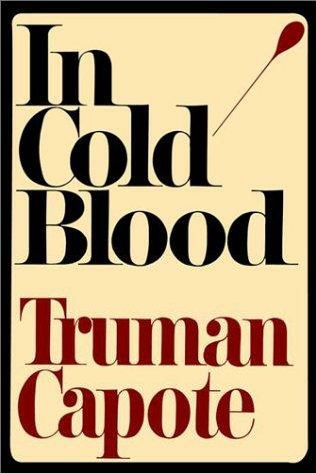
Reading: In Cold Blood by Truman Capote

I bookmarked this set of photographs by Jon Ruck a while ago and rediscovered it. I cannot remember where I originally found it but I like it for a few reasons. Breakfast is probably my favourite meal of the day, even if it is just toast and jam or porridge and honey. I love tea and coffee and orange juice, but perhaps it is the traditional fast-breaking that subconsciously appeals to me.
I also appreciate the coupling of the portraits with the shot of their breakfast; it's like matching people up to their pets.
And in some slight OCD way I am marginally disgusted by other people's breakfast, especially when people do not spread their chosen topping over toast with due care. Almost every breakfast is unique; unlike lunch and dinner which more often than not is shared and communal, everybody has a different ritual (or neurosis) when it comes to breakfast that is entirely personal.
Last weekend I visited the permanent collection at the British Library which is brimming with historical artefacts such as the Magna Carta and Beethoven's tuning fork. Starting soon is their very first photography exhibition which I look forward to being dragged along to by my sister in return for my imposing a visit to the David Starkey curated Henry VIII exhibition.
This week I think I will make this as part of my aim to start cooking more exotic dishes. I've made it before back home and it's a tasty dish but at university my idea of exotic is adding Henderson's Relish to my jacket potato/beans/cheese combination or using chutney instead of pickle in my ploughman's sandwiches.
Listening to: The Kick Inside (Kate Bush), Seamonsters (the Wedding Present), Feels (Animal Collective)
Reading: In Cold Blood by Truman Capote
Monday, 7 September 2009
Hertfordshire: England at its quietest
Staying or going is not what matters.
What matters is the mind.
So all of you, please work together,
cooperate and live in harmony.
Let this be your legacy
Berkhamsted//Potten End//Nettleden


Saturday, 5 September 2009
Britain has fallen off its bicycle
Our good friends at Article Magazine recently conducted a vigorous and highly-controlled series of calculations and computations, arriving at the conclusion that the coolest cities in the world are the flattest, Berlin and Amsterdam coming top. Why? Because there are few things that ooze effortless sophistication than the single-speed road bicycle.
Anyone who’s been to either of these cities will know this to be true. My absence from this very blog can be explained by a recent trip to the German capital, along with sister city Munich, and I have arrived back in London longing for a metropolis churning along atop the thin, elegant wheels of a road bicycle. Of course, there is an abundance of great things about our own cities, and another abundance of reasons why Berlin and Munich are such amazing cities apart from their love affair with the bicycle; but returning from these places reveals Britain’s woeful relationship with cycling, and begs the question how this can change.
There are certain features of European life that lend themselves to cycling; dryer and warmer weather, and wider roads and pavements that allow for cycle paths. However it really comes down, in my admittedly ignorant opinion, to two main factors; attitudes towards cycling, and the lack of a cycling tradition in the UK for the last 50 years.
Cyclists in Britain will know all too well the frosty and aggressive attitude exhibited towards them from both drivers and pedestrians. Speak to anyone who cycles regularly and you are unlikely to find one who hasn’t been involved in even a minor collision due to dangerous driving. In London, a relatively flat and cycle-friendly landscape, cycling is reserved for those prepared to risk life and limb; to put it simply, cycling just isn’t enjoyable in most of our main cities. The problem is self-fulfilling by its nature; the cyclist-friendly attitude seen in European cities is largely due to the fact that cycling is so popular. Many of the motorists themselves cycle, so a consideration and awareness of cyclists is second-nature; consequently while cycling remains relatively unpopular in our country, those who practise it remain in a precarious position. But the attitude with which cycling is held here extends beyond individuals; as a society, we tend to view cycling as either a health or a ‘green’ issue, and rarely as a genuinely enjoyable and fun activity. This has left us with an underlying cultural apathy towards it; while plans to create more cycle lanes in Britain are gingerly suggested to combat global warming, the abundance of these paths that line the roads in Europe have been placed there due to a passion and enthusiasm for bicycles.
Finding a solution isn’t easy, of course, but there is hope; the Mayor of London Boris Johnson, himself a keen cyclist, aims to install more cycle paths and to encourage more people to take up the activity. His plans for cycle rental points, a popular trend in Europe, is certainly a step in the right direction too, as are the governments plans to spread these schemes throughout the country. For now, we can only hope that these schemes will a) actually happen, and b) garner the desired results. What is clear is that they simply must happen if cycling is to take off in this country. It is not enough to hope that everyone will be compelled by their environmental hearts to take up a life of two-wheeled joy; no, the conditions must be right, and must be met. Rather discouragingly, Johnson remains opposed to an expanded congestion zone; if Europe is our model, and it has served this article well thus far, then it is clear that an increase in cycling must be propelled by a decrease in the number of vehicles on the road.
However this is indicative of a more significant hurdle on the path of British cycling. Where the tradition has thrived in Europe, we are almost starting again from scratch. Despite being home to the Raleigh bicycle company and a thriving cycling community in the 1950s, our cycling tradition is all but dead. We have no romantic allusions to chic road bicycles and sweeping avenues; indeed, while the stereotype of the Frenchman has him attired in a striped shirt cycling to the local café, the only caricature I can think of involving an Englishman and a bike is some tit pissing about on a penny farthing a hundred years ago. I have already mentioned how an enthusiasm for cycling in Europe has put them years ahead in terms of cycle paths, but there are problems that lie deeper. The first of these is road maintenance. The unrivalled quality of European roads makes cycling; they are smooth and clean, a puncture-free utopia. In Britain, the lack of any cycling tradition for the last 50 years means the roads are maintained only to a level that they are suitable to withhold buses, lorries and the high number of other vehicles. Little regard is given to cyclists, meaning once again that cycling is simply not as enjoyable as it should be, and certainly not as enjoyable as it is elsewhere.
The other problem is the bicycles themselves. In the 1990s a huge influx in mountain bikes came to the UK, and has remained ever since. And so, anyone buying a bike will take a visit to their local Evans, and be faced with the choice between a £700 road bike, or a £150 mountain bike. Thus, the death of the British cycling tradition has seen the market fuelled more by arbitrary consumerism rather than any practical rationale; mountain bikes are fairly redundant in cities, frustratingly burdensome and actually pretty useless for hills, and yet they are the most common bicycle in Britain, and still the most frequently stolen. In contrast second-hand road bicycles, in particular the European fixed-wheel variety which are an unparalled joy to ride through a city and ten-a-penny on the continent, are a rarity and often over-priced due to their association with art school posers and the cycling elite.
The problem, then, is twofold; not only does our society have an apathetic and cold relationship towards cycling, but even more seriously our lack of any tradition for fifty years has left us with an environment inhospitable to cycling, a lack of the things that make cycling so wonderful in the first place. Still, if things sound bleak there is still reason to remain optimistic. What is clear is that cycling is increasing in the UK, albeit slowly. The lack of a cycling tradition in the UK has set us back from Europe significantly, but there is hope that as more and more cycle paths emerge, and thus more cyclists, we will begin to see a more variable bicycle market, and roads better accommodated to two-wheels. And if not, at least you’ve got one good reason to put that German GCSE to good use.
Friday, 14 August 2009
Peter Mandelson: Labour’s answer to Dorian Gray

Peter Mandelson is a strange character. Sinister, charming, smarmy, Machiavellian, smooth, affable, charismatic; these are all adjectives that could describe the First Secretary of State, Business Minister, the Baron Mandelson of Foy and Hartlepool. When Peter Mandelson was made a Lord and brought back into the cabinet by Gordon Brown I was completely shocked and wondered what Gordon Brown could have possibly been thinking, bringing one of the most despised politicians in the country back into the forefront of government. Let's not forget, Mandelson is loathed by partisan Tories; after all he stole the centre-ground and middle class vote from the Conservative party and left them unelectable for a good decade. He is also hated by general conservative-minded old-fashioned folk who are repelled by his meterosexual, urbane tone (perpetuated by the mushy peas/guacamole fabricated anecdote) summed up perfectly by David Starkey labelling him a cretin or some such a couple of years ago on Question Time. They see the whole New Labour project as unfair because it stole some wealthy voters and it made it look cool to say you voted Labour amongst yuppies; they hate him because he embodies the nouveau riche yuppie generation borne of Thatcherism that the Barbour-wearing tax dodgers vehemently dislike. Mandelson also has the displeasure of being hugely disliked by many in his own party, especially those on the left who saw him as destroying the soul of the Labour party by dragging it kicking and screaming to the right. His mannerisms and personality – his lack of the "common touch" normally expected in Labour politicians – compounds his unpopularity.
Anyway this disbelief I felt when faced with Brown's decision to re-employ Mandelson after twice proving unreliable and being loathed as EU Commissioner proved to be shockingly misplaced. Not only did he perform some sort of magic to get the cabinet back on track and with more purpose (albeit attempting to privatise Royal Mail in the process) but successfully halted a potential cabinet coup and made ministers all around him rally round Brown like some sick Pied Piper of Hartlepool, preying on innocent Secretaries of State like Alan Johnson (and the youthful David Miliband, as if intentionally emulating the plaid Hamelin flautist). He now seems unstoppable, untouchable (but in such an unpredictable world by tomorrow could be sunk). According to some it is because he has nothing to lose. He is no longer as he was a youthful ambitious political obsessive, but a relaxed man on a mission: to save the Labour Party (from electoral ruin or interparty factionalism).
The Guardian website is a treasure trove of Charlie Brooker, David Mitchell and astute political analysis. It is on that website I was drawn attention to Peter Mandelson's resemblance to the fictional character of Dorian Gray in Oscar Wilde's classic. Read this excerpt from Decca Aitkenhead's interview with Mandelson:
"Everywhere we went, before my eyes people fell in love with him. Trade union bosses, management consultants, random strangers on railway platforms – no one seemed to be immune. I've never seen anyone seduce so many people with such effortless allure – nor take such palpable pleasure in every conquest – and the intensity of his theatre is electrifying to behold."
Basil Hallward describes meeting Dorian Gray for the first time: "When our eyes met, I felt that I was growing pale. A curious sensation of terror came over me. I knew that I had come face to face with someone whose mere personality was so fascinating that, if allowed to do so, it would absorb my whole nature, my whole soul, my very art itself."
Aitkenhead on Mandelson: "His skin is dewy, as if fresh from a spa facial, and his grooming so flawless he looks almost hyper-real, the cuff links and tie delicately co-ordinated, with their detail inversely echoed in his socks. I'd swear he even has his eyebrows shaped, though he denies it – "What, pay someone to rip my eyebrows out? Is that some kind of sexual thing?" His whole body seems weirdly untroubled by the passage of time, his movements fluid to the point of feline, but it's the voice above all which can mesmerise. He talks very softly – that old trick for winning people's attention that John Prescott, for one, never learned – and unusually slowly, giving the impression that every single word is invested with deep significance, even when it's quite innocuous."
That last bit is the most worrying – "his whole body seems weirdly untroubled by the passage of time". It does seem odd that a man who has been through such a long and arduous time in mainstream politics (two cabinet resignations, the 1980s electoral nightmares for Labour, constant vilification by the press) looks so immaculate. Remember that Mandelson was always at Blair's right hand and was part of the New Labour project even before Blair became high-profile in the shadow cabinet. Now look at how the past decade has ravaged Blair's face:
He looks almost

as old and wrinkly as Steve Lamacq.
Contrast this with Mandelson's smooth skinned face, wrinkle free and sneering. His hair is always perfectly in place and remains thick and dark. Anyone who knows the story of The Picture of Dorian Grey may recognise such a comparison – Gray wished to stay beautiful forever and for all the nastiness in his personality to show itself in a portrait of himself rather than on his handsome face. Perhaps Mandelson has such a portrait in his office. Or perhaps he has wished for all his ugliness to come out in Blair rather than himself.
In Oscar Wilde's novel Lord Henry asks Basil how often he sees Dorian Gray: "Every day. I couldn't be happy if I didn't see him every day. He is absolutely necessary to me." Multiple newspaper articles have indicated that Peter Mandelson sees the Prime Minister every day, particularly since the catastrophic European elections after which Mandelson saved Brown's face somewhat. Clearly the Prime Minister is as mesmerised by Mandelson as everyone else seems to be.
Anyway this may seem bizarre enough but I've been thinking more and more about Mandelson and New Labour and the idea that perhaps, New Labour was not merely adopting electability/Anthony Giddens' theory of the Third Way/neoliberalism/centre-ground etc. but that it has the signs of a violent revolution. Shrew, a Feminism and Non-violence publication active in the 1970s refused to accept violence and recognised that "too often violent revolution has involved the substitution of one group of rulers for another" and that nonviolent revolution was an evolving process, reaching a point when "the concept of power itself is destroyed". Barbara Deming, another influential feminist, argued, the distinction between violence and nonviolence was that those committed to nonviolence refused to "injure the antagonist". In other words, nonviolent revolution is about resisting (in a positive-sum game) and violent revolution is about destroying your opponents (negative-sum). With such choices it seems that New Labour destroyed their enemies within the Labour Party (banishing the hard left and militant tendency permanently) and reduced the Conservative Party to an embarrassing rump of MPs; rather than a popular revolution, we merely substituted one group of rulers for another. Needless to say, violent revolutions end in power corrupting and the masses losing out to political egos. Sound familiar?
The Demise of the Science Museum
When not battling out on the tennis court with Rosa this summer, I've found myself in a similar situation to hers; lacking in employment and money, and overwhelmed by the huge expanse of time that lies between the end of one term and the beginning of the next. (I've personally undertaken the task of fixing my bike, but unless you also own a decrepit old road bike that doesn't brake, change gear or even pedal properly, and consists of all continental parts that have to be searched for on ebay, this is unlikely to appeal to you). Attempting monetary gains outside the realm of employment is always possible, but, from someone 20 cds down and only £40 richer, don't rely on it to relieve your financial woes. No, when time is rich and, well, you aren't, it is the bargain bin of activities to which you must head. And so it is that in the summer time I find myself visiting more galleries and museums than the most artsy of tourists.
Wednesday, 12 August 2009
I was bored before I even began
Having around two months of holiday over the summer and an empty to-do list can seem so overwhelming that it becomes more stressful than term time.
Fear of losing my sanity to Loose Women and Homes Under the Hammer has forced me to look elsewhere for daytime entertainment. I tried cross-stitch but I'm not getting very far and am pretty sure I've already fucked it up.
Needless to say the Guardian's G2 crosswords prove useful on a day of nothing. But my new found time-wasting exercise is doing jigsaw puzzles.
I bought this from Oxfam for a couple of pounds. I love the tube map so it is the perfect 500-piece puzzle for me.


Charity shops are great for jigsaws as they are cheap, most have been checked and because they are so unpopular (probably because most people on the planet with taste have better things to do) there is normally a fairly good selection.
My next tip will both consume time and improve health - another activity I am dallying with is exercise. Me and Tom (of this very blog) have begun a weekly tradition of tennis followed by the excellent Rough Trade pop quiz at the Lexington. Tennis is perhaps the only sport I can play that is for enjoyment rather than health purposes/pain/misery.
Not only does sport fill one's time and potentially put off death for minutes, hours, days etc. but it also gives a good excuse to try out some interesting sportswear. By wearing clothes made by the same label, you can pretend to be sponsored by a certain brand. Personally I have selected purple Adidas running shorts, Adidas Stan Smith trainers and a Fred Perry t shirt (tennis would not be tennis without some Fred Perry attire). The look is completed with an Adidas jacket and with a bottle of orange squash and my racket slung over my shoulder I really look the part. Of course this is most of the fun and perhaps I have taken it too far by choosing to actually partake physically in exercise. Luckily for me all my apparel were bargains from second hand shops or old sportswear I found around my house; a good sports outfit can be very pricey. American Apparel has the triple advantage of i) being expensive ii) appearing to be cheap and brand-less iii) not being as suitable for sport as you'd hope. But you could always buy a swimsuit and pose at London Fields lido instead.
Anyway my third tip for curing summer boredom is the much more enjoyable prospect of learning something new. The past couple of years I have considered languages, photography, even calligraphy. This summer I am in the throes of learning the piano accordion. I managed to borrow a full-size 120 bass piano accordion that looks a little like this:

This photo does not fully display the dimensions of the instrument. It measures approximately 50cm lengthways and 40 cm widthways, and weights around 8 kg. Now on a fairly small female such as myself this takes up a considerable amount of my body and overwhelms me somewhat, I cannot practice too long for fear of back and arm ache. Seeing as beginners are supposed to start on the 48 bass size (48 buttons under the left hand rather than 120) you could say (as Tom of H.V. often does) that I have "taken on too much".
The piano accordion is a pretty amazing instrument that I would recommend learning if you can get hold of one and has proven itself to be very versatile. I have learned a few bits and pieces like La Marseillaise and the Red Flag as well as playing along to Beirut and trying out bad cover versions.
Boredom quasher 4: Thanks to the internet there is an endless scope to time-wasting activities. Youtube leads from one to another, and my recent favourite has to be this.
But aside from Pavarotti's freaky eyebrows I have been somewhat consumed by the Oxford Dictionary of National Biography which is a dream come true for Wikipedia users like me who are frustrated by the gaps in knowledge in their biographies. Today's Biography of the Day was none other than Tom Kilburn – not the TK of TGK Graphic but the man who pretty much invented the computer. As Tom G Kilburn puts it, he's the reason TK's beautiful bearded face will never appear on Google image search.
What you really want to be doing on the internet is watching the film used in Adam Curtis' recent art installation project. It is both amazing and a bit of a headfuck thanks to his abilities/perseverance regarding archive footage. Nonetheless he is a genius and pretty much all his stuff is captivating and entertaining.
Any tips on staving off boredom greatly appreciated. As long as I'm not reduced to reading Iain Dale's blog or Philip Schofield's twitter to fill my afternoon with comedy I'll be content.
Thursday, 6 August 2009
Hiding behind class divisions prevents us from criticising those who do a disservice to British sport
The role of sports fans is rarely underrated, least of all by the players at the centre of their attention. As an Oscar winner’s speech methodically praises their director, their family, and, last but inevitably not least their adoring supporters, so too post-match interviews are littered with praise for managers, team mates and above all the thousands of faces that fill the stands, roaring along with their heroes’ triumphs and sharing in their heartache. Indeed, their role should not be underrated by anyone; the enthusiasm of a crowd can make the difference between glorious victory and dismal defeat. However, with this influence a new question arises; when does the behaviour of sports fans go too far?
Friday, 31 July 2009
This week's atheist camp has at its heart a harmful brand of atheism
Today, somewhere near Bath, tents are being taken down, trains are being boarded and 24 newly enlightened children are on their way home. They are, of course, returning from Camp Quest, the first ever atheist camp in the UK.
Which brings us back to the atheist camp. If one already had suspicions that it was preaching to the converted, its websites’ appeal to “children of atheists, agnostics, humanists and freethinkers” confirms this. The raison d’etre of Camp Quest is inseparable from Dawkins’ aggressive form of atheism; if atheism is defined as the absence of belief in a deity, it should be no more that this. To actively send children to a camp of this nature will only serve to encourage and promote an intolerance and distain for other world views, where we should be encouraging the acceptance and integration of all beliefs.
Still, there is a plus side. If many atheists came from strict religious upbringings, perhaps we can hope that the 3.30 train from Somerset to London is currently occupied by the next generation of Britains’ priests and bishops. It would certainly bring a smug smile to this atheist’s face.
Thursday, 30 July 2009
When does admitting you’re wrong become an “embarrassing u-turn”?
It can’t be easy being a world leader in the Barack Obama era. Ever since the president-extraordinary was sworn in on January 20th, Brown, Berlusconi and co have seemed that bit more inadequate. While Obama signs away the future of Guantanamo Bay, offers peace to the middle East and attempts to introduce state-run healthcare to the US, the rest of them find themselves falling ever into his shadows, tangled in sordid sex stories, islam bating comments and souring election defeats. Politics aside too, let’s face it: we all wanted a leader who looked that good in sunglasses. We cringed as our lousy lot fell about themselves for a buddy-shot with the new Pres, and gave a collective sigh of relief when it turned out that Obama wasn’t perving at that woman’s behind in that photo.
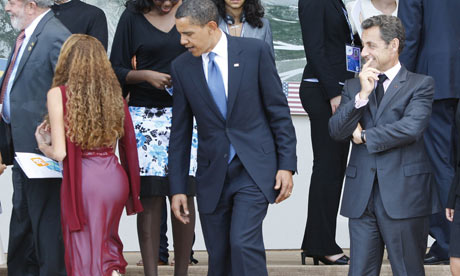
As it turned out this week, Obama isn’t even that bad at getting things wrong. In allegedly his worst week in office, which started with a badly managed universal health care move, things went from bad to worse as Obama stepped into the old political death-trap of the race-row. To summarise a much told story: black professor Henry Gates is arrested for disorderly conduct after policeman Jim Crowley arrives at his home following reports that Gates and another black man have tried to break into his house, Obama calls the behaviour of the cop “stupid”, and a national race row erupts. (It should be noted that Obama made no comment about race, admitting that he didn’t know the details; rather, he stated that arresting a man in his own home was stupid, and that one could understand Gates’ anger. To deny this latter fact is to ignorantly deny that there is a history of discrimination against black people in America. Obama’s comments may have been too hasty, but the race row that has erupted is a distortion of the events that have occurred, and fails to acknowledge that the election of a black president has not dissolved all racial issues in the US.)
Of course, Obama has not escaped without criticism (most noticeably from right wing Fox maniac Glenn Beck, which can only really be a good thing). But if there was one thing saving Obama from suffering even more in the polls, it is no doubt his admission that he made an error of judgment, and the beer he will share with Gates and Crowley to diffuse the matter. As debates about racial identity are replaced by online polls guessing at the beers that will be consumed, Obama lives to fight another day.
If there is any world leader left looking inferior here, it is Gordon Brown. For our own government doesn’t fare too well when it comes to back-tracking. Whether it comes to spending cuts, the publication of expenses, the Iraq war inquiry or semi-privatising Royal Mail, one phrase has persistently dogged Brown’s attempts to back-peddle out of controversial policies, a phrase that shares headline space with him almost monthly: this is, of course, the “embarrassing u-turn”.
So just when does admitting an error of judgment become a u-turn? When does the salvaged dignity that comes with Obama’s move give way to a charge of ineptitude and flip-flopping? Well the simple answer is time. As soon as the issue began to gather pace, Obama was quick to admit that his words could have been more thought-out, and even quicker to directly telephone those involved and organise the White House knees-up. Compare this to Brown, who seemingly waits until his policy is hailed with criticism, and then waits some more, and then finally changes direction. But to explain it all by time is too general, and isn’t necessarily true; were Brown to drop an idea as soon as any opposition came his way, it would be an even greater sign of weakness. No, time only masks the real issue, which is this; the longer Brown appears to delay the abandonment of a policy, the more he looks like he is acting in his own interest, dismissing all criticism until his idea literally can’t run any further, and then dropping it. Brown is left looking incompetent, unable to read public opinion; unable to care.
All this harks back to Brown’s unfortunate inability to present himself clearly and confidently to the public. The shame of this is twofold; firstly, it isn’t necessarily the case that Brown is all the things he appears to be. I do believe that he cares about public opinion, and feel that his reluctance to make any knee-jerk media-friendly decisions is a strength, not a weakness. While I agree with most critics that he has not shown the strength of leadership that many had hoped, the claims that he is inept are untrue. But the greater tragedy is that Brown is likely to lose the next election to a man with great confidence, but a complete lack of ideas. While Obama’s presentation skills are supported by ambition and policy, Cameron is all style over substance.
What Brown’s “embarrassing u-turns’ show us, then, is that a leader needs to be able to present themselves with self-assurance; however possessing this quality alone does not a good leader make.
This Week: Having seen Ben Stiller kiss a waxwork woman in Night of the Museum 2, and this week Mark Wahlberg lock lips with a monkey, Tom has decided that the romantic unity between humans and other species should not enter the film world.
Subscribe to:
Posts (Atom)